Why I Started Prepping and Storing Homemade Food for My Dog
I’ll be sincere — When I first started making homemade meals for my dog Bruno, I didn’t think much about storage. I’d cook some thing fresh, Serve it, And that was that. But life gets busy, And it didn’t take long before I found myself disarrange around the kitchen with a hungry dog at my feet and nothing ready to go.
That’s when I understand: If I wanted to stick with homemade food long-Term, I had to figure out how to store and prep smarter. Now, After experimentation, Testing (And a few freezer mishaps), I’ve created a schedule that keeps Bruno’s food fresh, Safe, And easy to serve — Even on my busiest days.
If you’re cooking for your pet and want to save time with out compromising quality, This post is for you. I’ll walk you through every thing I’ve learned about prepping and storing homemade dog food in a way that’s convenient, Safe, And stress-Free.
The Importance of Proper Storage
Before we jump into containers and batch sizes, let’s talk about why proper storage matters.
1. Keeps Food Safe from Bacteria
Homemade pet food doesn’t have the preservatives like in commercial brands, Which is great for your pet’s health — But it also means it can destroy quickly if not handle properly. Improper storage can lead to bacterial growth (Think: Salmonella or listeria), Which can seriously misuse your dog or cat.
2. Maintains Nutritional Value
Exposure to air, Moisture, And fluctuating temperature can reduce vitamin and nutrients in food. By storing food correctly, You maintain the goodness you worked so hard to cook.
3. Saves You Time and Sanity
Developing food in batch and set aside it right means fewest last- Minute scrambles and more consistent feeding routines.
4. Batch Cooking: The Foundation of Convenience
Batch cooking has been my time saver. Every Sunday, I dedicate a hour to cook Bruno’s meals for the whole week. I normally rotate proteins (Chicken, Turkey, Beef) And insert healthy carbs (Like rice or quinoa), Vegetables (Carrots, Green beans, Pumpkin), And healthy fats (Like fish oil or olive oil).
Here’s a typical Sunday batch:
- 2 lbs ground turkey
- 1.5 cups brown rice (cooked)
- 1 cup chopped carrots and green beans
- 1 tbsp olive oil
- ½ tsp ground eggshell for calcium
Once it’s all cooked, cooled, and mixed, I portion it out for the week.
Best Ways to Store Homemade Pet Food

Let’s get to the good part: How to store it right so it stay fresh and ready when you need it.
1- Refrigeration (Short-Term Storage)
If you’re developing food to last 3–4 days, The fridge is your best companion.
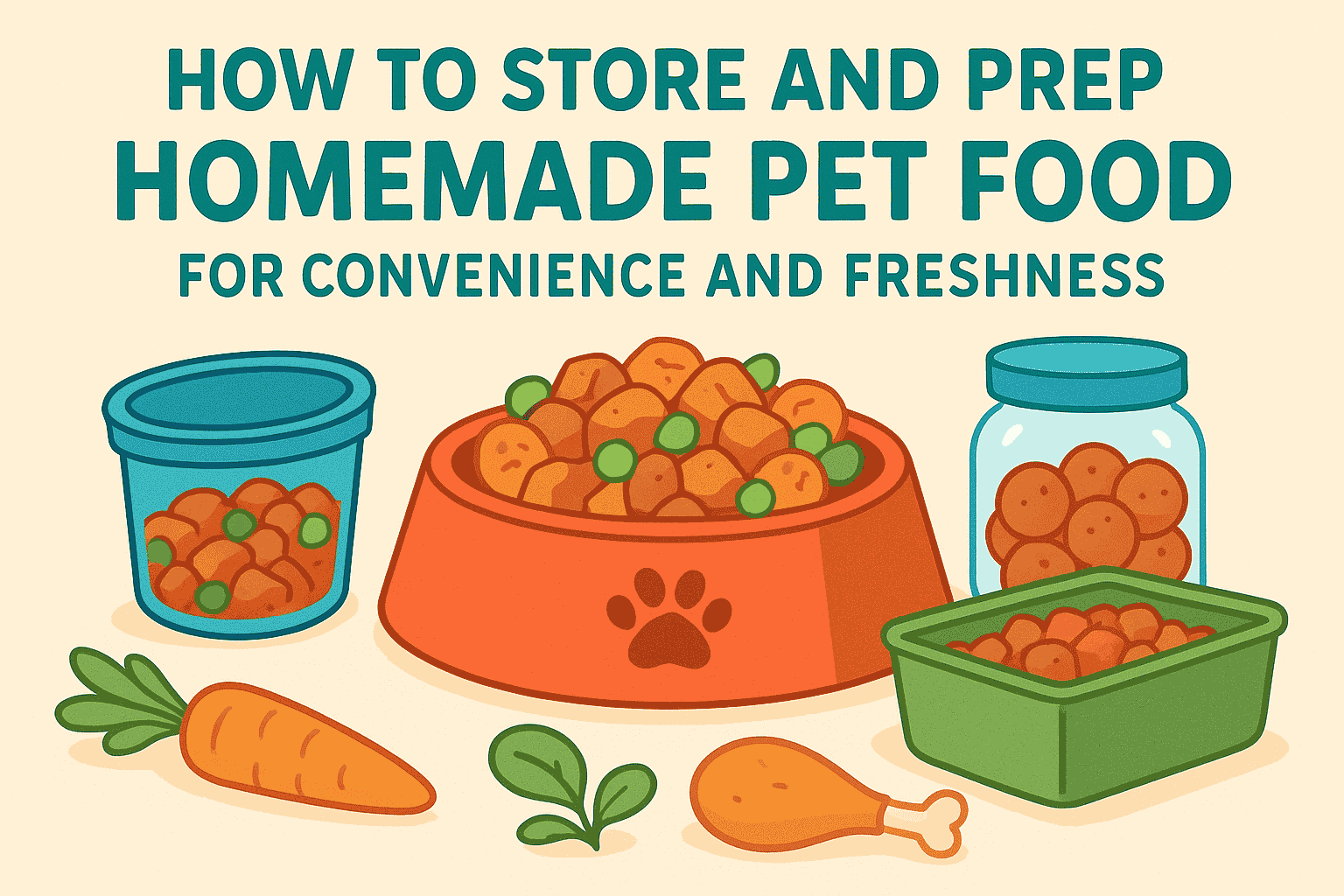
- Use airtight container to intercept moisture loss and odor transfer.
- Glass containers work well for this — They don’t absorb smells and are microwave safe.
- Store portions based on your pet’s daily meals to make serving quick and easy.
Pro-tip : Label containers with the date you made the food. It helps keep track and avoid decomposing and spoilage.
2. Freezing (Long-Term Storage)
For anything beyond 3-4 days, Freeze it. Trust me, Your future self will thank you.
- Freeze in single meal portions — Silicone molds, Ice cube trays, Or small containers work good.
- Once frozen, Transfer the cubes in to freezer safe bags to save space.
- Label each bag with the date and recipe (Especially if you’re rotating ingredients).
- Defrosting Tip: Move a frozen portions into the fridge the night before, Or use a warm water dip if you’re in hurry. Don’t microwave frozen food directly, It heats unequally and can create hot spots.
Choosing the Right Storage Containers
Not all containers are created equal, and I learned this the hard way when one cracked in the freezer and leaked chicken juice everywhere. Here’s what works:
Look For:
- BPA-free plastic or food-grade silicone
- Glass with leak-proof lids
- Stackable designs for easy organization
- Containers that are dishwasher, microwave, and freezer safe
- My Go-To Combo: I use 3- cup Pyrex containers for fridge meals and silicone muffin trays to freeze individual servings. Once frozen, I pop the portions into ziplock bags labeled by day.
How Long Does Homemade Pet Food Last?
Let’s break it down:
Storage Method Shelf Life
____________________________________________________________________________________________________
In the fridge 3-4 days
In the freezer Up to 3 month (Ideally with in 2)
- When to Toss It: If the food smells sour, Changes color, Or has any mold, Throw it out immediately no exceptions.
Maintaining Freshness: Extra Tips That Help
1. Cool Before Storing
Let the food cool to room temperature before sealing and storing. This avert condensation and keeps bacteria at bay.
2. Don’t Store in the Cooking Pot
I made this mistake in the early days big batch, Tired me, Pot straight into the fridge. Turns out, It traps heat and creates a perfect bacteria breeding ground.
3. Use Vacuum Sealers (Optional But Amazing)
If you’re really into prepping in advance, A vacuum sealer keeps food fresher for longer by abolish air. It’s a bit of an investment, But ideal if you freeze in bulk.
Making Mealtime Easy
1. Portion by Meal, Not by Day
I feed Bruno twice a day, so I portion out two meals per container. That way, I only need to open one container per day and don’t risk rotting from repeated air exposure.
2. Warm It Slightly Before Serving
Dogs lean to enjoy their food more when it’s not ice-Cold. I warm Bruno’s meal in the microwave for about 15 seconds — Just enough to take the chill off. (Always stir and check the temp with your finger.)
3. Add Fresh Toppings Before Serving
Occasionally I add a spoon of plain yogurt, A sprinkle of turmeric, Or a half boiled egg for variety and add nutrition.
What About Supplements?
If you add supplementation or medications to your dog’s food, Do it at serving time, Not during batch prep. Heat and freezing can break down nutrients, And it’s easier to control dosage per meal when done fresh.
I keep a small basket of supplements (Fish oil, Joint support powder, Calcium) near Bruno’s feeding station and add them as needed.
Real Talk: When It Gets Overwhelming
Yes, Preparing home made pet food can feel like a second job at times. But just like meal preparing for our own selves, It gets easier with time. And the benefits — Shiny coat, Clean digestion, Zero picky eating drama — Make it 100% worth it.
When I travel or get busy, I’ll occasionally use a trusted fresh dog food delivery service as a backup. This is key is flexibility, Not perfection.
Final Thoughts: Keep It Fresh, Keep It Simple
Storing and preparing home made pet food is not about being fancy – It’s about making your life relaxed while giving your pet the best. You don’t need special appliance or a chef’s kitchen. Just a bit of planning, The right containers, And a procedure that fits your lifestyle.
So, Either you are cooking for a pup like Bruno or a unusual kitty, Know this: You’re doing something amazing. With a little prep and the right storage, You’re giving your furry pet not just food, But health, Energy, And love in every bite.
Powered by mealpetix